RES-MAB: Propolis as a business model
3 de febrero de 2026
Propolis as a Business Model
May 7, 2025
RES-MAB is an international project funded by the PRIMA Foundation in which the Alto Bernesga Biosphere Reserve participates as a collaborating partner and also leads one of the project’s work packages.
The main objective is to accelerate the transformation of Mediterranean biosphere reserves into landscapes that are more resilient and adaptable to climate change, adopting an integrated approach to the water-energy-food-ecosystems (WEFE) nexus.
The project envisions the creation of seven pilot sites in reserves in Morocco, France, Lebanon, Italy, Jordan, Slovenia, and Spain, which will act as living laboratories to experiment with and implement innovative solutions geared towards sustainable territorial development.
Among its key goals is the development of a Socio-ecological Modeling Tool, designed to empower stakeholders in decision-making and integrate the WEFE approach into policies, development plans, and management strategies with a medium- and long-term impact.
More information is available at: https://www.resmab.eu/
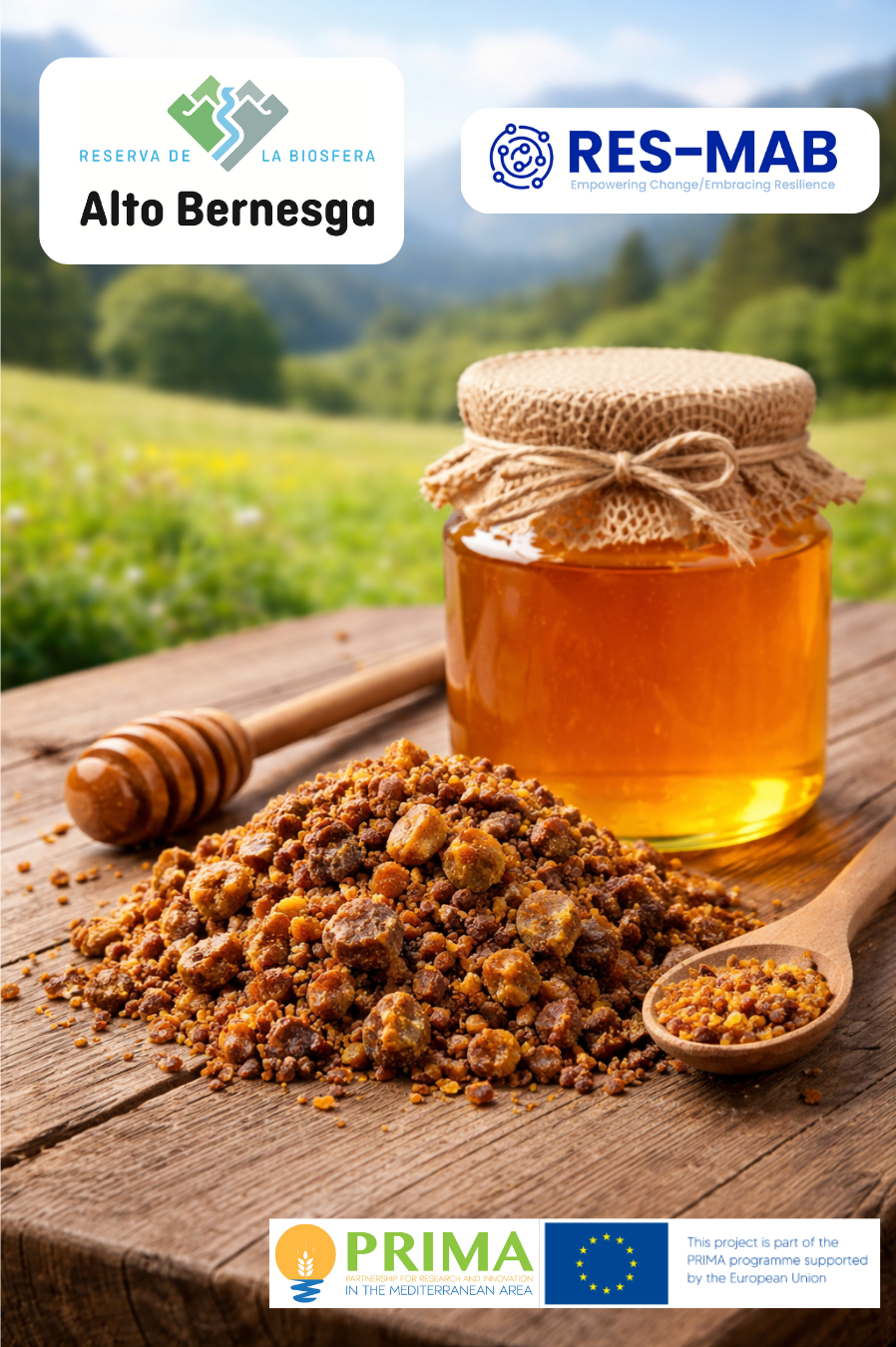
Propolis
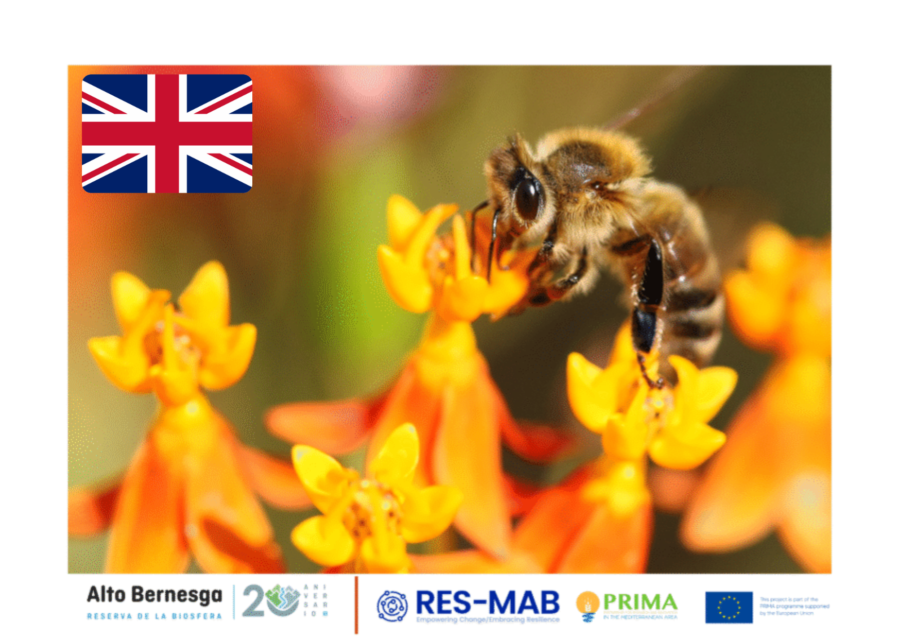
Bees make propolis from leaves, tree bark, and petals, mixing them with wax and using this substance to seal cracks and holes in the hive.
Propolis, commonly known as bee glue, is rich in numerous active compounds such as phenolic acids, flavonoids, and terpenes. Its antioxidant, anti-inflammatory, and antimicrobial properties are highly valued. Due to its chemical structure and functional groups, propolis is a highly aromatic substance with strong coloring power.
Several studies have demonstrated the effectiveness of propolis as an antimicrobial agent against Listeria monocytogenes in cured chorizo, as well as its ability to control other foodborne pathogens in vacuum-packed cooked ham. It is also important to remember that Listeria can be very serious for pregnant women, people over 65, and people with weakened immune systems.
Although numerous studies characterizing propolis exist, further research is needed on its incorporation into the food industry, specifically regarding dosages to ensure there are no changes in the taste and color of food products. Similarly, the behavior of phenolic acids, flavonoids, and terpenes under high-temperature treatments, such as those used in the food industry, should be studied more thoroughly.
Business Models
One of the most important aspects of the project is the development of innovative business models. Therefore, the Alto Bernesga Biosphere Reserve, in collaboration with the University of León and its Institute of Food Science and Technology, is conducting research based on the use of propolis as a substitute for nitrates and nitrites in the meat industry, employing it as a preservative.
As a member of UNESCO’s MAB program, the Alto Bernesga Biosphere Reserve (RB Alto Bernesga) must fulfill the following objectives:
- conservation of biodiversity and the ecosystems it contains,
- logistical support for research, training, and communication, and
- development of local communities.
It is in this last area that the RB Alto Bernesga aims to assist beekeepers with the characterization of their propolis and its potential use as a new marketable product.
To this end, beekeepers can contact the RB Alto Bernesga via email at veronica.delrio@altbernesgabiosfera.es and jorge.frias@altobernesgabiosfera.es or the Institute of Food Science and Technology by phone at +34 987 293 039.